Bochum-Grenoble-Taipei Memory Colloquium
2025-2026
This virtual colloquium series focuses on topics in the philosophy of memory and related philosophical areas, but reaches out also to philosophically interested researchers in the cognitive sciences. The colloquium is organized by the Centre for Philosophy of Memory at Université Grenoble Alpes (Kourken Michaelian and Denis Perrin), the Ruhr-Universität Bochum (Markus Werning and Juan Álvarez), and the Institute of Philosophy of Mind and Cognition at the National Yang Ming Chiao Tung University (Ying-Tung Lin and Chris McCarroll).
Please join the meetings on Zoom with the details below. Registration is not necessary.
- link: https://univ-grenoble-alpes-fr.zoom.us/j/98859063721?pwd=6Xx6tmUpCSaSD4BkF4bPGhrxSuca5t.1
- meeting ID: 988 5906 3721
- password: 302355
First semester

José Carlos Camillo
(Université de Genève)
Title: Singular thought and episodic memory
12:15-13:45 Central European Summer Time (UTC+02:00)/18:15-19:45 Taiwan Standard Time (UTC+08:00), 23/10/2025
Abstract: Singular thought (or reference) refers to the capacity to single out entities or events among others—that is, to capture their numerical identity. Philosophers typically explain this capacity either in conceptual terms or in perceptual ones (De Carvalho, 2016). For example, Strawson (1959) argued that distinguishing two identical objects requires spatiotemporal concepts, while perceptual accounts claim that singular content arises from automatic processes of object individuation in the visual system (Green & Quilty-Dunn, 2021). Yet, perceptual approaches struggle to explain how agents distinguish between two objects with identical properties or re-identify them over time. To address this, some have proposed an intermediate view: abstract object representations in the prefrontal cortex support perceptual processes, thereby enabling both individuation and (re-)identification (De Carvalho & Newen, 2019). So far, however, most philosophical accounts of singular thought have neglected empirical research on episodic memory. Evidence shows that the hippocampus organizes event representations through spatiotemporal coordinates and binds object properties to these coordinates (Yonelinas, 2013; Eichenbaum, 2017; Ekstrom & Yonelinas, 2020). This suggests that objects can be represented as clusters of properties individuated by their spatiotemporal coordinates—without requiring an explicit concept of space and time. In light of this, I argue that episodic memory contributes to singular thought by automatically assigning objects unique spatiotemporal coordinates. Moreover, because the hippocampal system integrates temporally distant coordinates, it enables the reidentification of objects across time. In this way, episodic memory provides a naturalistic basis for singular thought that avoids reliance on conceptual schemes and sidesteps the limitations of purely perceptual accounts.

Juan Álvarez
(Ruhr-Universität Bochum)
Title: Vicarious remembering and mnemic genuineness
12:15-13:45 Central European Time (UTC+01:00)/19:15-20:45 Taiwan Standard Time (UTC+08:00), 06/11/2025
Abstract: Vicarious remembering occurs when a subject recollects an event experienced by someone else, typically on the basis of second- or third-hand testimony about that event. This phenomenon has garnered considerable attention in the psychology of memory, with some researchers supporting what I call “vicariism.” According to this view, vicarious remembering is a genuine form of remembering, and theories of episodic memory should therefore be expanded to accommodate it (Pillemer et al. 2015, 2024; Pond and Peterson 2020). However, discussions of the nature of vicarious remembering are conspicuously absent from the philosophy of memory literature (though see De Ávila 2025). In this talk, I provide a systematic discussion of the potential genuineness of vicarious remembering and argue that vicariism warrants closer examination for two reasons. First, appropriate causation and retrieval reliability—two prominent criteria of mnemic genuineness—rule out the genuineness of vicarious remembering. Second, while recent formulations of these criteria can accommodate vicariism (Werning 2020; Michaelian 2024), they do so at the expense of abandoning “first-handedness,” the principle according to which a genuine memory of a particular both presents itself as directly originating in one’s past first-hand experience of that particular and provides first-hand knowledge of it.

Markus Werning and Sofia Pedrini
(Ruhr-Universität Bochum)
Title: The problem of mnemic justification: How can episodic memories provide genuine (internalist) epistemic justification for factual beliefs?
12:15-13:45 Central European Time (UTC+01:00)/19:15-20:45 Taiwan Standard Time (UTC+08:00), 20/11/2025
Abstract: The paper addresses a problem that arises from four independently justifiable but, as it appears, mutually inconsistent propositions: (H1) Episodic remembering and experiential imagining are principally alike in their representational content and their phenomenal character. (H2) Episodic remembering is apt to serve as a genuine (internalistic) epistemic justification for factual beliefs that can be derived from the mnemic content. (H3) Experiential imagining is not apt to serve as a genuine (internalistic) epistemic justification for any factual beliefs that can be derived from the imaginative content. (H4) The (internalistic) epistemic justificatory force of an experiential mental state is either grounded in its representational content or its phenomenal character (or a combination of both). We discuss and reject several potential solutions to the problem before developing our own approach to addressing it. The paper explicitly investigates the nature of mnemic content in comparison to imaginative content. It builds on semantic, phenomenological, and naturalistic arguments. A key notion to be addressed is the “sense of realness” that episodic remembering shares with perception. We combine a predictive processing approach with trace minimalism to account for this sense of realness.

Ching Keng
(National Taiwan University)
Title: Episodic memory and the sense of self: A constructivist approach
12:15-13:45 Central European Time (UTC+01:00)/19:15-20:45 Taiwan Standard Time (UTC+08:00), 04/12/2025
Abstract: This talk investigates whether episodic memory necessarily involves a sense of self, examined from a Buddhist perspective. As is well known, the Buddhist tradition strongly denies the existence of a constant and invariable self. Nevertheless, it equally insists that the sense of self not only exists but is deeply ingrained and exceedingly difficult to eradicate. Since no real self exists, such a sense of self must be understood as a construct arising from more fundamental elements. I take this constructivist view of the self to be characteristic of the Buddhist understanding of the sense of self. Building on the distinction between the narrative self and the minimal self, I will argue that a sense of minimal self is always embedded in episodic memory. I further propose that this minimal sense of self arises from coherent perceptual experiences organized from a particular perspective. The talk concludes with a few directions for future inquiry.

Patrick Eldridge
(University of New Brunswick)
Title: Intersubjectivity in episodic memory: Phenomenology and the conditions for joint remembering
12:15-13:45 Central European Time (UTC+01:00)/19:15-20:45 Taiwan Standard Time (UTC+08:00), 18/12/2025
Abstract: For the past decade, authors influenced by classical phenomenology have been inserting themselves into debates in social ontology, collective intentionality, and theories of joint cognition and emotion. (Zahavi, Moran, Szanto, Caminada, Salice, Overgaard, et al.) To start, I extract some of the salient features of this literature for an account of the type of ‘togetherness’ that individual episodic rememberers might achieve when they jointly reminisce, and define it further by positioning it relative to accounts of joint mental time travel (Michaelian && Sutton) and some aspects of collective memory literature. (Halbwachs, Olick, Landsberg, Hirsch) However, after reviewing some of the basic features of phenomenological approaches to individual episodic memory (like the type of metacognition called ‘time-consciousness’), we see that episodic remembering faces some serious obstacles to ‘togetherness’ that, say, shared emotions or collaborative actions do not. To make a start on overcoming these problems, I offer an account of the intersubjective status of episodic memories and the pervasive impact that the awareness of other minds has upon the individual’s relationship to their own episodic memories, and argue that this allows for ‘joinable’ (if not joint) remembering. By carefully considering a case of the awareness of someone else’s memories, and the impact this has upon one’s own, I delineate the intentional architecture involved in making room for others in one’s own episodic memory. This runs counter to some statements by Ricoeur and is more fine-grained than Casey’s account of reminiscing.

Tania Casimiro
(University of Stirling)
Title: Archaeologies of social forgetting: Material memory, care, and urban precarity
12:15-13:45 Central European Time (UTC+01:00)/19:15-20:45 Taiwan Standard Time (UTC+08:00), 22/01/2026
Abstract: This talk brings social archaeology into direct conversation with debates in memory studies by treating memory not only as a mental capacity, but as a distributed, material, and infrastructural achievement, one that is politically managed and ethically contested. Building from three strands of my research in Portugal, I argue that contemporary material traces make visible the points at which public systems of care and recognition break down, producing what can be called social forgetting. I will discuss evidence of elderly abandonment, approached as an archaeology of absence and deferred responsibility, where mundane objects, domestic arrangements, and institutional residues index ruptures in care; the archaeology of housing-precarity reads the city’s built environment in temporary fixes, informal modifications, eviction scars, and the material choreography of overcrowding, as a memory field shaped by policy and inequality; and finally an inscribed wall where teenagers carved names and marks, examined as a low-authority but persistent archive of belonging, aspiration, and place-claiming. Across these cases, I develop a framework of place-memory under constraint: how remembrance is denied by architecture, property regimes, welfare institutions, and everyday practices of inscription. Methodologically, the talk combines recordings of material evidence with contextual interpretation, ethical reflexivity, and (where possible) community-grounded accounts, to ask a shared question: what obligations arise when archaeology encounters living, vulnerable memories and when refusal, redaction, or co-authorship may be the most responsible form of knowledge production.
Dylan Trigg
(Central European University)
Title: Atmospheres of pastness: On childhood nostalgia
12:15-13:45 Central European Time (UTC+01:00)/19:15-20:45 Taiwan Standard Time (UTC+08:00), 05/02/2026
Abstract: The aim of this talk is to consider the relationship between childhood and nostalgia. My overarching claim in this talk is that to understand the relationship between nostalgia and childhood, we have to understood how temporality of nostalgia is best grasped as an atmosphere. This claim is predicated on the conviction that an atmospheric reading of childhood can account for the diffused temporality of nostalgia together with how specific objects are generative of resonant meaning within this temporality. The talk unfolds in three stages. First, I consider what it means to conceive pastness in terms of an atmosphere, focusing especially on the role affects play in this conception. Second, I apply this framework to the case of childhood. With recourse to the work of Gaston Bachelard, I argue that nostalgia toward childhood is neither memory nor imagination, but instead a synthesis of each aspect grasped through reverie. Finally, I consider how childhood as a distinct atmospheric phenomenon is grasped from the perspective of adulthood.
Second semester
Francesco Fanti Rovetta
(Ruhr-Universität Bochum)
Title: Ruminative remembering and the flexibility of scenario construction
12:15-13:45 Central European Summer Time (UTC+02:00)/18:15-19:45 Taiwan Standard Time (UTC+08:00), 14/04/2026
Abstract: Ruminative remembering refers to episodic memory retrieval during a ruminative episode. Ruminative memories are negatively biased, self-referential, overgeneral, and represent the same (or a limited number of) episode(s) over and over (Hertel et al. 2021). Thus, a proper characterization of ruminative remembering requires us to consider not any single instance but the diachronic unfolding of retrieval processes. From a scenario construction perspective (Cheng 2026), the episodic memory system flexibly integrates a relatively stable memory trace with semantic information in the construction of a scenario. The activation of semantic information upon retrieval depends in part on the retrieval context (cue, mood, processing mode, goals). The variability of the retrieval context contributes to the constructive flexibility of scenario construction, such that diverse scenarios can be constructed from the same trace at different times. As a conceptual tool to characterize diachronic patterns of flexible/rigid scenario construction, I introduce the notion of scenario space. The scenario space is a similarity space of potential scenarios constructible via semantic completion on the basis of a given memory trace. Rumination, as a cognitive habit (Watkins & Nolen-Hoeksema 2014), provides a fixed retrieval context involving self-referential, repetitive, abstract thoughts and negative affect, explaining the rigidity of scenario construction in ruminative remembering.

Jessie Munton
(University of Cambridge)
Title: Retrieval induced forgetting and the epistemic significance of remembering
12:15-13:45 Central European Summer Time (UTC+02:00)/18:15-19:45 Taiwan Standard Time (UTC+08:00), 28/04/2026
Abstract: This talk starts from the phenomenon, widely studied in psychology and neuroscience, of retrieval induced forgetting (RIF). Retrieval induced forgetting occurs when, in the course of remembering a piece of information x (a phone number for instance), the subject must suppress competing, related pieces of information, y and z, which are consequently forgotten (at least for some period of time). The phenomenon of retrieval induced forgetting reveals to us that remembering comes at a price. But we struggle to articulate what that price is with standard measures of epistemic value. What is the epistemic difference which remembering makes? To answer that question I argue that we need to distinguish between potential epistemic value—the value which attaches to states we are poised to use,—and actual epistemic value—the value which attaches to states we are occurrently accessing and using. In cases of retrieval induced forgetting we trade potential epistemic value for actualised value. This distinction has implications for another significant question at the intersection of philosophy of mind and epistemology: what is the epistemic role of attention? I argue that attention is the gateway that mediates between these forms of epistemic value. Retrieval induced forgetting is an unusually clear instance of the trade-off we face between these two sorts of epistemic value, but it is just one manifestation among many of the attentional mechanisms that govern the interface between memory and forgetting, retrieval and suppression. To understand epistemic value, the forms it takes and the cognitive achievements in which it vests, we need to pay attention to the way the mind moves through and engages with information, to the variegated nature of belief, and the transformations wrought by the mind’s movement through information that is in some weak sense already known to it.

Kaspars Eihmanis
(University of Latvia)
Title: TBA
12:15-13:45 Central European Summer Time (UTC+02:00)/18:15-19:45 Taiwan Standard Time (UTC+08:00), 05/05/2026
Abstract: TBA

Carlotta Pavese
(University of Oxford)
Title: TBA
12:15-13:45 Central European Summer Time (UTC+02:00)/18:15-19:45 Taiwan Standard Time (UTC+08:00), 19/05/2026
Abstract: TBA
Tony Cheng
(Waseda Institute of Advanced Study)
Title: TBA
12:15-13:45 Central European Summer Time (UTC+02:00)/18:15-19:45 Taiwan Standard Time (UTC+08:00), 16/06/2026
Abstract: TBA

Juan Diego Bogotá
(University of Jyväskylä)
Title: TBA
12:15-13:45 Central European Summer Time (UTC+02:00)/18:15-19:45 Taiwan Standard Time (UTC+08:00), 23/06/2026
Abstract: TBA
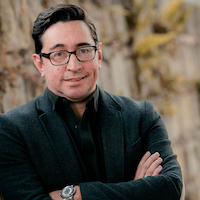
Santiago Amaya
(Rice University)
Title: TBA
12:15-13:45 Central European Summer Time (UTC+02:00)/18:15-19:45 Taiwan Standard Time (UTC+08:00), 07/07/2026
Abstract: TBA