Bochum-Grenoble-Taipei Memory Colloquium
2024-2025
First semester
Hakwan Lau
(Institute for Basic Science, Korea)
Subjective perceptual experience requires procedural memory
12:15-13:45 Central European Summer Time (UTC+02:00)/18:15-19:45 Taiwan Standard Time (UTC+08:00), 17/10/2024
Abstract: Unfortunately, despite explicit advertisements to the contrary, current science tends to conflate different notions of consciousness. While theories claim to target subjective experiences, they also count evidence concerning general wakefulness, cognition, and perception, as critical support. This means that most current theories are driven by severe experimental confounds. Putting theories aside, if we think about what subjective experiences really involve, I suggest that the relevant sensory representations need to be Assertoric, Relative (to each other), and thereby, Metacognitive (ARM). This kind of ARM content comes about because the brain has mechanisms that track the statistical properties of its own activities. Exercising these mechanisms is akin to applying a skill, which involves familiarity with one's own brain. Therefore, it is an implicit mnemonic process.
James Openshaw
(Nanyang Technological University)
Generalised remembering
12:15-13:45 Central European Time (UTC+01:00)/19:15-20:45 Taiwan Standard Time (UTC+08:00), 31/10/2024
Abstract: Recollections of our personal past are often impressionistic, not so much for lack of detail but for a certain generality of subject matter. If you've made a journey many times, you may ‘relive’ it through memory without reliving a particular occasion. I offer an account of (what I will call) generalised remembering that treats it as a semantic phenomenon. In particular, it is the construction of an event representation that is temporally imprecise in virtue of referential indeterminacy. I recommend a plurivaluationist account of such indeterminacy that can fold into our broader theory of memory accuracy. Though distinct from the framework itself, I urge theorists to see generalised and specific recollections of events as psychologically continuous. As such, even resolutely systems-oriented projects ought not shelve generalised remembering as a separate kind or afterthought. And this also motivates the semantic account of generalised remembering over accounts which would suggest a qualitative difference in content or kind. I conclude that generalised remembering, though differentiated only by its semantic profile, warrants the attention it is slowly beginning to receive.

Jocelyn Yuxing Wang
(Rutgers University)
Memory as a generative source of understanding
12:15-13:45 Central European Time (UTC+01:00)/19:15-20:45 Taiwan Standard Time (UTC+08:00), 14/11/2024
Abstract: What is the function of memory? Many in the recent literature have rejected the traditional view that memory merely functions to preserve previously acquired information, such as information acquired through perception (Burge, 1997; Goldman, 2009). Some of these recent views instead argue that memory generates new epistemic justifications (Bernecker & Grundmann, 2019; Miyazono & Tooming, 2023). This paper proceeds in the same spirit as the generativist views in the literature, but identifies understanding instead of epistemic justification as the kind of epistemic value that memory functions to generate. I argue that one of the functions of memory is to improve our understanding of subjects and systems represented in the contents that we previously acquired. This is possible thanks to the fact that the memory system further processes previously acquired information, especially during the memory consolidation process. Drawing on empirical research, I argue that the consolidation process systematically generates the specific type of representations that contribute to understanding: they make accessible underlying relationships between different components of the represented subject or system, and do so in a way that is adaptive to the agent’s goals. The consolidation process therefore significantly enhances our performance in generating representations that provide understanding.

Oryan Zacks
(Tel Aviv University)
Constructing mental constructions: The evolution of imagination through episodic-like memory
12:15-13:45 Central European Time (UTC+01:00)/19:15-20:45 Taiwan Standard Time (UTC+08:00), 28/11/2024
Abstract: Human imagination is a complex, rich and highly developed cognitive ability, constituting an important part of human experience. Approaching human imagination from an evolutionary perspective raises questions such as: how has this complex ability evolved? What were the circumstances that led to the elaboration of this ability and what precursors needed to be in place? Finally, is imagination uniquely human, or is this ability more widespread across the animal kingdom? While the subjective qualities of imagination are difficult—if not impossible—to probe in non-linguistic animals, behavioural studies offer insights into whether non-human animals exhibit imaginative processes. In this talk, I propose that episodic-like memory is a foundational component of imagination, an evolutionarily necessary yet insufficient step toward its full development. This view relies on the link between episodic memory and imagination in humans, as suggested by proponents of constructive episodic simulation theory (and others). I examine the phylogenetic distribution of episodic-like memory and planning abilities across vertebrates, and conclude with a comparative framework that integrates both behavioural and neurophysiological data.
Mark Sinclair
(Queen's University Belfast)
Habit, memory, time
12:15-13:45 Central European Time (UTC+01:00)/19:15-20:45 Taiwan Standard Time (UTC+08:00), 12/12/2024
Abstract: This talk returns to the fundamental issues of habit, memory and time. Against the background of nineteenth-century French philosophy, the talk will first argue that habit, in its multiple forms, cannot be explained physiologically or materially. This will lead to the claim that the power of habit involves a primitive form of memory according to a non-linear, non-spatialising conception of time.

Yasushi Hirai
(Keio University)
Second-person episodic memory: Rethinking interpersonal dimensions of remembering
12:15-13:45 Central European Time (UTC+01:00)/19:15-20:45 Taiwan Standard Time (UTC+08:00), 09/01/2025
Abstract: Autobiographical memory can be understood as a systematic organization of events in the world from the perspective of "what happens to me." However, not all these events converge equally on the dimensionless point called "me." This is because many experiences involve interactions with those around me—through active, passive, or joint actions—where second-person others inevitably come into play. Moreover, the second-person perspective remains crucial during remembering. Since episodic memory is deeply tied to narrative construction, its source evaluation tends to encompass not only cognitive but also affective rapport with others. Someone affectively reliable, who remembers what I cannot retrieve alone, might contribute not only to my episodic memory but also recursively enhance their own affective reliability as a trusted other. Thus, "my" episodic remembering, to some degree, involves the second-person other’s episodic remembering. This presentation aims to reexamine these aspects of second-person episodic memory in the broader contexts of first-person–focused episodic memory, semantic memory, and collective memory, illuminating their unique characteristics and theoretical implications.
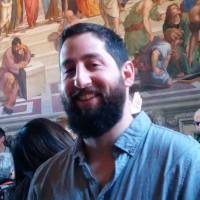
Jonathan Najenson
(Ruhr-Universität Bochum)
Mapping memories: Can we reconcile the spatial and mnemic conceptions of the hippocampus?
12:15-13:45 Central European Time (UTC+01:00)/19:15-20:45 Taiwan Standard Time (UTC+08:00), 23/01/2025
Abstract: The function of the hippocampus has long been understood through two distinct constructs: cognitive maps and episodic memory. Recent theoretical work proposes these conceptions are not independent but fundamentally integrated, with cognitive maps serving to structure memory encoding, storage, and retrieval. Considering the mechanisms underlying cognitive maps, I argue that careful attention to mechanistic decomposition reveals a tension when aiming to reconcile the spatial with the mnemic. Specifically, the functional components required for spatial navigation cannot be straightforwardly incorporated into memory functions. This leads to a dilemma. Either we must extend our conception of episodic memory beyond its conventional hippocampal boundaries and functional character, or we are restricted to specific computations that leave us with an explanatory gap between these two conceptions. Either horn we adopt comes with a cost—radically revising memory systems on the one hand, or losing the explanatory richness of cognitive map theory on the other.
Second semester

Muriel Leuenberger
(University of Zurich)
What determines the magnitude of a mental interference?
12:15-13:45 Central European Summer Time (UTC+02:00)/18:15-19:45 Taiwan Standard Time (UTC+08:00), 15/04/2025
Abstract: Several scholars have recently argued that we possess, or ought to be granted, something in the vicinity of a right against mental interference (RAMI), such as a (moral or legal) right against indoctrination, nonconsensual use of neurotechnologies, brainwashing, or thought or mind control. Infringements of this right differ in their seriousness. Deleting all memories from a person’s mind would more seriously infringe the right than emotionally dampening the memories of their breakfast. We suggest that the greater the magnitude of a mental interference, the more serious the infringement of the RAMI, other things being equal. In this paper, we begin to develop an account of the magnitude of a mental interference.

Uljana Feest
(Leibniz University of Hannover)
Memory as an epistemically blurry object of research
12:15-13:45 Central European Summer Time (UTC+02:00)/18:15-19:45 Taiwan Standard Time (UTC+08:00), 29/04/2025
Abstract: My talk will take as a point of departure the facts that memory research is typically assumed to have an object (i.e., memory) and that this very object is not well-understood. I construe the situation as one where from the perspective of scientists the object is "blurry." Using implicit memory and working memory as examples, I will illustrate what I mean by the notion of epistemic blurriness. I will shine some light on the challenges this poses and on how researchers attempt to tackle these challenges. Specifically, I will argue that this blurriness concerns questions about descriptions and taxonomy of memory types.
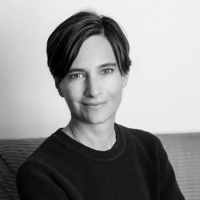
Katja Crone
(TU Dortmund University)
Remembering feelings of past life phases
12:15-13:45 Central European Summer Time (UTC+02:00)/18:15-19:45 Taiwan Standard Time (UTC+08:00), 13/05/2025
Abstract: What does it mean to remember how it felt during your late adolescence, your school days, or when you started your first job in a new city? This talk explores the nature of such affective recollections — of feelings that were characteristic of particular phases of life. I examine whether this kind of remembering can be fully explained by the standard phenomenology of episodic memory, such as the familiar sense of mentally “reliving” a past experience. Based on a modified version of Mac Cumhaill's notion of 'phasic memory', I argue instead that these recollections often involve the reactivation of a former existential feeling — a global sense of relating to the world — which becomes part of the present experience. Drawing on empirical findings from affective neuroscience, I also suggest that such affective memory may occur independently of episodic recall.
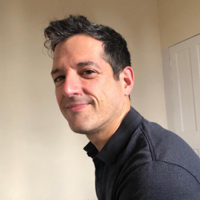
Victor Verdejo
(Pompeu Fabra University)
Intersubjective remembering and remembering together
12:15-13:45 Central European Summer Time (UTC+02:00)/18:15-19:45 Taiwan Standard Time (UTC+08:00), 27/05/2025
Abstract: In this talk, I will focus on cases of intersubjective remembering objects or object-involving events. I will distinguish three kinds thereof: collaborative remembering, common remembering, and remembering together. Plausibly, remembering together requires more than just some collaboration in remembering, and also more than merely happening to remember common objects from earlier experience. I will suggest that a genuine form of remembering together is captured by what I have elsewhere called “remembering as the same." In its intersubjective version, remembering as the same involves different subjects representing an entity as the same across time. I will argue that this notion can play a central role in the account of successful communication and thought sharing about the past. I will conclude by reflecting more broadly on how this approach may contribute to our understanding of collective memory.

Aidan Horner
(University of York)
The remembering and forgetting of complex episodic events
12:15-13:45 Central European Summer Time (UTC+02:00)/18:15-19:45 Taiwan Standard Time (UTC+08:00), 10/06/2025
Abstract: Episodic events are thought to be represented in a coherent manner, allowing for the holistic retrieval of all event elements. The forgetting of events is also thought to be holistic – when we forget an event, we forget it in its entirety. I will present behavioural, computational modelling, and fMRI research that provides evidence that events are both retrieved and forgotten holistically, in both younger and older adults and in developmental populations. I will also present data suggesting this holistic retrieval is specific to events, and may not always apply to the forgetting of other representations – such as the forgetting of object representations. I will then discuss how complex events are retrieved over time and whether changes occur as a function of systems consolidation. I will use this body of research to provide a theoretical framework that makes predictions about the underlying neural mechanisms that support retrieval and forgetting across a hierarchy of representations: from low-level object representations, to event representations, to higher-order episodic narratives.

Francesca Righetti
(Ruhr University Bochum)
Autonoetic consciousness through subjective descriptions: A phenomenological framework
12:15-13:45 Central European Summer Time (UTC+02:00)/18:15-19:45 Taiwan Standard Time (UTC+08:00), 24/06/2025
Abstract: What does it mean to relive an experience in remembering? Since Tulving (1985), philosophers have approached this question through the notion of autonoetic (self-knowing) consciousness—also called autonoesis and often described as the sense of "reliving" or "re-experiencing" one’s personal past. However, since Tulving first hypothesized that each memory system is accompanied by a distinct form of consciousness, philosophers have often reduced autonoesis to a mere characteristic feature or "flavor" of episodic memory. In contrast to these reductionist approaches, this talk proposes a methodological shift toward a phenomenological framework that takes autonoesis seriously as a mode of consciousness in its own right, grounded in the first-person experience of memory. Investigating self-consciousness requires a methodology capable of accessing the first-person perspective, since self-consciousness is always lived and subjective. In this talk, I will present both theoretical and methodological arguments for treating autonoesis as a distinctive mode of consciousness.
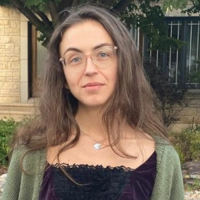
Jelena Markovic
(Université Grenoble Alpes)
Grief bears traces of our history: Nussbaum and implicit emotional memory
12:15-13:45 Central European Summer Time (UTC+02:00)/18:15-19:45 Taiwan Standard Time (UTC+08:00), 08/07/2025
Abstract: In Chapter 4 of Upheavals of Thought, Martha Nussbaum gives an account of the historical development of our emotions. She rejects the idea that our present emotions are “fully and reliably” determined by our present situation, instead arguing that the emotions we have in adulthood have their roots in childhood experiences. She makes the striking statement that “in a deep sense all human emotions are in part about the past” (2001, p.177). In this talk, I will describe Nussbaum’s account of the historicity of our emotions, classifying the phenomenon as a form of implicit emotional memory that shapes present emotional experience. I will point to emotional reinstatement from appraisal theory as a potential mechanism by which past emotional experiences shape present ones. Finally I will situate the concept in relation to other forms of emotional memory.